Blog
11 Actionable ADHD Cleaning Checklists to Beat Overwhelm Today
Transform chaos into clarity with step-by-step cleaning routines designed for neurodivergent brains.
Have you ever stood in the middle of a messy room, knowing it needs to be cleaned, but feeling completely paralyzed about where to start?
You’re not alone. Traditional cleaning advice doesn’t work for ADHD brains. We need smaller task chunks, visual cues, and instant gratification—not vague instructions like “clean the kitchen.”
In this guide, you’ll get 11 ADHD cleaning checklists for different scenarios—from 5-minute emergency resets to monthly deep cleans. Each checklist includes detailed steps, time estimates, and pro tips specifically designed for how neurodivergent minds actually work.
You’ll learn:
- Room-by-room cleaning checklists
- Emergency “guests are coming” protocols
- Low-energy day survival lists
- How to choose the right checklist based on your current energy level
Let’s start with the easiest one.
1. The 5-Minute Emergency Reset Checklist
Time needed: 5 minutes
Best for: Unexpected guests, reducing visual chaos quickly, breaking paralysis
Why This Works for ADHD Brains
When you’re overwhelmed, your brain needs a quick win. This checklist uses the “surfaces first” principle—creating maximum visual change with minimum effort. You’re not deep cleaning. You’re creating the illusion of clean, which is often enough to reset your mental state.
The key insight: visible clutter creates mental clutter. Clear the surfaces, and your brain calms down.
Step-by-Step Instructions
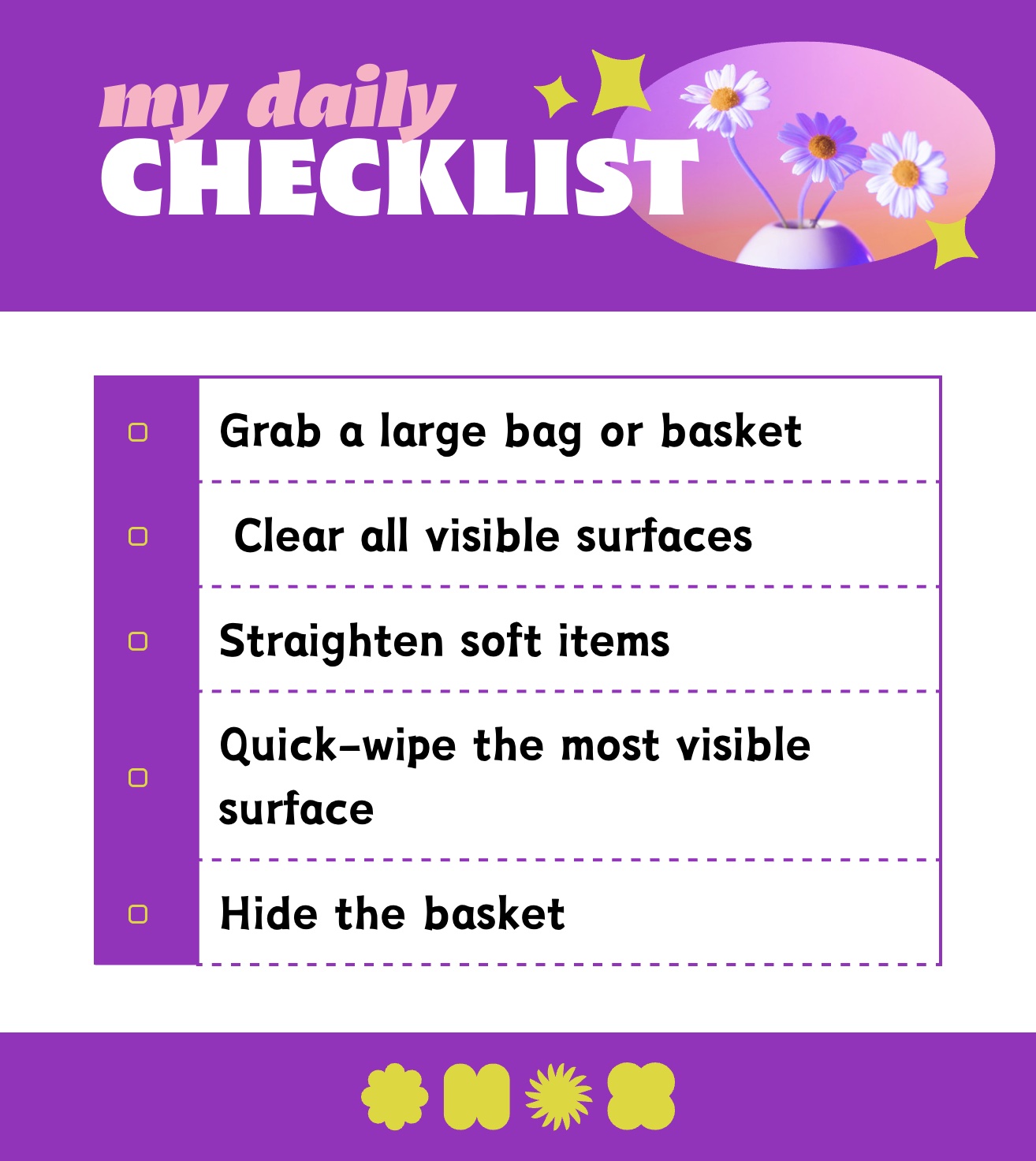
Step 1: Grab a large bag or basket
This is your “catch-all” container. Don’t think about where things go yet—just collect.
Step 2: Clear all visible surfaces
Sweep everything off tables, counters, sofas, and floors into your basket. Books, remotes, clothes, random papers—everything goes in.
Step 3: Straighten soft items
Shake out and straighten blankets, cushions, and throw pillows. This takes 30 seconds but makes rooms look 50% tidier.
Step 4: Quick-wipe the most visible surface
Pick ONE surface—usually the coffee table or dining table. Wipe it down. That’s it.
Step 5: Hide the basket
Put it in a closet, behind a door, or under a bed. You’ll deal with it later. (Or not. No judgment.)
Pro Tips
- Set a timer for exactly 5 minutes. When it goes off, STOP. This prevents the ADHD trap of “just one more thing” that turns into three hours.
- Never open drawers or cabinets. That’s a rabbit hole. Surfaces only.
- Use a song as your timer. Pick a 5-minute track and race to finish before it ends.
TadaFlow Tip: Use TadaFlow’s Quick Reset mode to get a randomized 5-minute checklist sent to your phone. No decisions required—just follow the steps.
2. Daily Kitchen Cleaning Checklist (10-15 Minutes)
Time needed: 10-15 minutes
Best for: Daily maintenance, preventing dish pile-ups, keeping the most-used room functional
Why This Works for ADHD Brains
Kitchens spiral out of control faster than any other room. One dirty dish becomes ten. One crumb becomes a sticky counter. This checklist follows a “top to bottom, dry to wet” sequence that prevents you from re-dirtying areas you’ve already cleaned.
The secret: clean as you cook, not after. But if you’re reading this, it’s probably already “after.” That’s okay. This checklist has you covered.
Step-by-Step Instructions
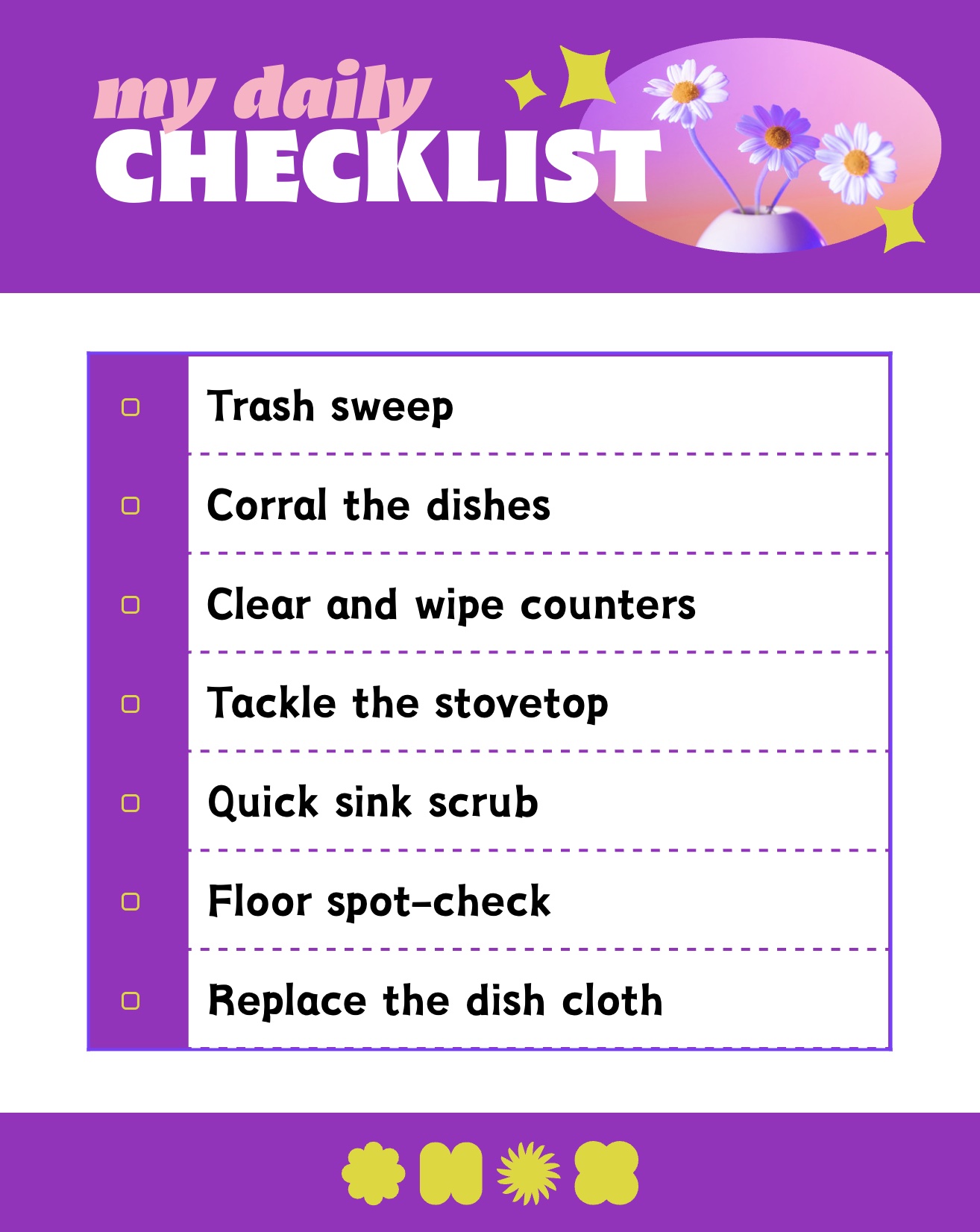
Step 1: Trash sweep
Walk around the kitchen with a garbage bag. Throw away anything obvious: empty packages, food scraps, expired items visible on counters.
Step 2: Corral the dishes
Move ALL dirty dishes to the sink or load them directly into the dishwasher. Don’t wash yet—just consolidate.
Step 3: Clear and wipe counters
Put away anything that doesn’t live on the counter. Then wipe down all surfaces with a damp cloth or cleaning wipe.
Step 4: Tackle the stovetop
Wipe down the stovetop surface. If there’s stuck-on food, spray cleaner and let it sit while you do the next step.
Step 5: Quick sink scrub
Rinse out the sink. If dishes are piled there, stack them neatly to one side first.
Step 6: Floor spot-check
Don’t mop the whole floor. Just wipe up any visible spills or crumbs with a damp paper towel.
Step 7: Replace the dish cloth
Swap out your sponge or dish cloth if it smells. This takes 5 seconds and makes a huge difference.
Pro Tips
- Keep a small trash can next to the sink. Reduces the friction of throwing things away while cooking.
- Use the “one in, one out” rule. Every time you take something out, put something back.
- Clean while waiting. Microwave running? Wipe a counter. Water boiling? Load three dishes.
3. Bedroom Quick-Tidy Checklist (10 Minutes)
Time needed: 10 minutes
Best for: Creating a calm sleep environment, morning routine, reducing decision fatigue
Why This Works for ADHD Brains
Your bedroom directly affects your sleep quality, and poor sleep makes ADHD symptoms worse. This checklist focuses on creating a visually calm space that signals “rest” to your brain.
The goal isn’t perfection—it’s creating a room you can actually relax in.
Step-by-Step Instructions
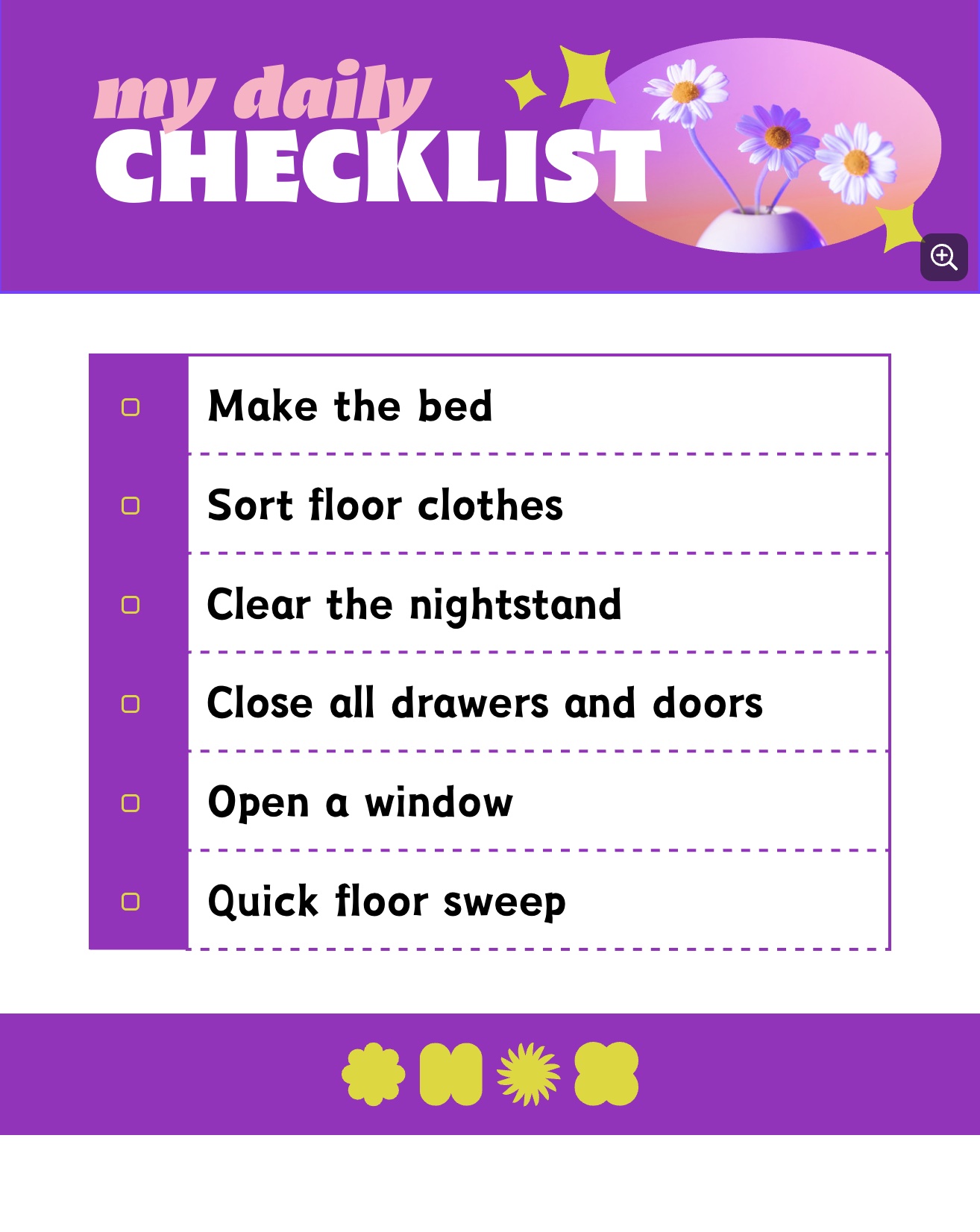
Step 1: Make the bed
Pull up the sheets, straighten the comforter, arrange pillows. This single action makes the entire room feel cleaner. Takes 2 minutes.
Step 2: Sort floor clothes
Dirty clothes → laundry basket. Clean clothes → designated “worn but clean” chair or hook. Don’t fold anything yet.
Step 3: Clear the nightstand
Remove everything except essentials: lamp, phone charger, maybe a book. Put cups and plates in the kitchen.
Step 4: Close all drawers and doors
Open drawers and closet doors create visual noise. Close them all. You don’t have to organize what’s inside—just close them.
Step 5: Open a window (2 minutes)
Fresh air resets the room. Even in winter, 2 minutes of ventilation helps.
Step 6: Quick floor sweep
Vacuum or sweep the visible floor area. Don’t move furniture—just hit the open spaces.
Pro Tips
- Create a “clothes purgatory” zone. A dedicated chair or hook for clothes that are worn but not dirty. This prevents floor piles.
- Make your bed immediately after waking. Before your brain has time to object.
- Keep bedroom activities limited. The less you do in your bedroom, the less clutter accumulates there.
4. Bathroom Daily Maintenance Checklist (5-10 Minutes)
Time needed: 5-10 minutes
Best for: Preventing buildup, quick guest prep, maintaining hygiene
Why This Works for ADHD Brains
Bathrooms are ADHD-friendly cleaning zones. They’re small, contained, and have clear boundaries. You can see the entire space at once, which reduces overwhelm. Plus, the results are immediately visible—instant dopamine hit.
This checklist is for daily maintenance. Deep cleaning comes later.
Step-by-Step Instructions
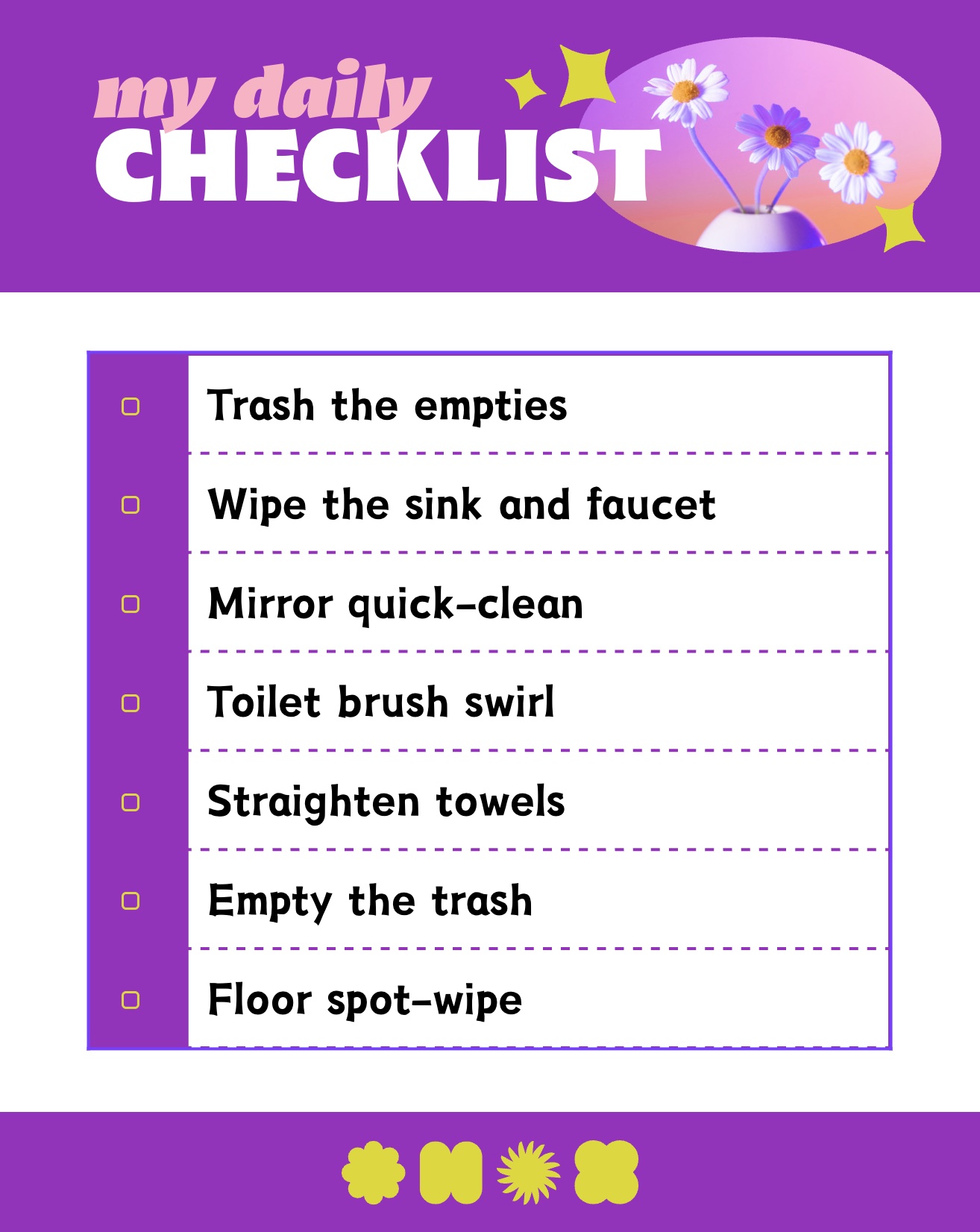
Step 1: Trash the empties
Throw away any empty bottles, used cotton pads, or packaging. Check behind the toilet and under the sink.
Step 2: Wipe the sink and faucet
Use a cleaning wipe or damp cloth. Focus on toothpaste splatters and water spots. 30 seconds.
Step 3: Mirror quick-clean
Wipe the mirror with a dry cloth or paper towel. Glass cleaner optional—often a dry wipe is enough.
Step 4: Toilet brush swirl
Quick scrub inside the bowl. No need for deep cleaning—just prevent buildup.
Step 5: Straighten towels
Hang towels neatly or swap them out if they’re damp/smelly.
Step 6: Empty the trash
Don’t wait until it’s overflowing. Empty it when it’s 3/4 full.
Step 7: Floor spot-wipe
Wipe around the toilet base and any visible spots on the floor. Use a cleaning wipe or damp paper towel.
Pro Tips
- Keep cleaning wipes under the sink. Visible and accessible = actually gets used.
- Squeegee after every shower. Takes 30 seconds, prevents 90% of soap scum buildup.
- Do one deep clean per week. Daily maintenance means deep cleaning takes 15 minutes instead of an hour.
5. Living Room Weekend Reset Checklist (20-30 Minutes)
Time needed: 20-30 minutes
Best for: Starting the week fresh, hosting prep, family cleaning time
Why This Works for ADHD Brains
Living rooms are high-traffic zones where clutter from the entire household accumulates. This weekend reset prevents the “slow creep” of mess that eventually becomes overwhelming.
The checklist is designed to be done in chunks—you can take breaks between sections without losing your place.
Step-by-Step Instructions
Step 1: Basket collection
Grab a laundry basket. Walk around the room collecting everything that doesn’t belong: dishes, toys, mail, random items. Don’t put anything away yet—just collect.
Step 2: Sofa reset
Remove everything from the sofa. Shake out cushions. Fluff and arrange pillows. Check between cushions for lost items (and crumbs).
Step 3: Clear coffee table and side tables
Everything off. Wipe surfaces. Put back only what actually belongs there.
Step 4: Corral electronics
Gather remotes, chargers, and cables. Put them in a designated spot or container.
Step 5: Dust visible surfaces
TV screen, shelves, picture frames, decorations. Use a microfiber cloth or duster.
Step 6: Vacuum or sweep floors
Focus on high-traffic areas and visible spaces. Don’t move furniture.
Step 7: Return basket items
Now take your collection basket and return items to their proper rooms. This is a separate task—don’t combine it with collecting.
Step 8: Plant care
Water plants, remove dead leaves, wipe dusty leaves. Often forgotten but makes rooms feel alive.
Pro Tips
- Use the “one zone, one song” method. Each task gets one song. When the song ends, move to the next task.
- Invest in a nice-looking basket. Keep it by the sofa for daily clutter collection.
- Do a 2-minute reset every night. Prevents the weekend reset from becoming a weekend project.
6. Laundry Complete Process Checklist (Segmented)
Time needed: 10 minutes active (spread across 2-3 hours)
Best for: Breaking the laundry doom cycle, preventing “clean clothes mountain”
Why This Works for ADHD Brains
Laundry is the ultimate ADHD nemesis: multiple steps, waiting periods, easy to forget, and boring. This checklist breaks it into discrete micro-tasks with built-in reminders.
The key insight: laundry isn’t one task. It’s six separate tasks that happen to involve the same clothes.
Step-by-Step Instructions
Step 1: Gather (5 minutes)
Walk through the house with your laundry basket. Collect ALL dirty clothes—check bathroom floors, bedroom chairs, behind doors.
Step 2: Sort (2 minutes)
Quick sort: darks and lights. Or skip sorting entirely and wash everything on cold. Simplify.
Step 3: Start wash + SET REMINDER
Load the machine. Start it. Immediately set a phone alarm for 40 minutes. This is non-negotiable.
Step 4: Transfer + SET REMINDER
When the alarm goes off, transfer to dryer. Set another alarm for 45 minutes. Don’t trust yourself to remember.
Step 5: Remove immediately
When the dryer alarm goes off, remove clothes RIGHT NOW. Don’t wait “just 5 minutes.”
Step 6: Put away OR use the clean clothes system
Either fold/hang immediately, or use a designated “clean clothes” basket or chair. Having a system for “clean but not put away” prevents the dreaded clothes mountain.
Pro Tips
- Use ONE laundry basket. Multiple baskets = multiple decisions = paralysis.
- Consider a capsule wardrobe. Fewer clothes = less laundry = less overwhelm.
- If folding is torture, don’t fold. Hang everything, use bins, or embrace the “clean clothes chair.” Find what works for YOUR brain.
TadaFlow Tip: TadaFlow’s Laundry Tracker sends automatic reminders at each stage. No more forgotten wet clothes sitting in the washer for three days.
7. Low-Energy Day Survival Checklist (5 Minutes)
Time needed: 5 minutes maximum
Best for: Depression days, illness, burnout, “I just can’t today” days
Why This Works for ADHD Brains
Some days you’re running on 5% battery. Traditional cleaning advice doesn’t account for this. This checklist is about damage control—preventing things from getting worse, not making them better.
The only goal: don’t let the situation deteriorate.
Step-by-Step Instructions
Step 1: Visible trash only
Look around from where you’re sitting or standing. Throw away any trash you can see without moving much.
Step 2: Dishes to sink
Move dirty dishes to the sink. Don’t wash them. Just relocate them.
Step 3: Clothes to basket
Any clothes on the floor go into the laundry basket. Don’t sort. Don’t wash. Just contain.
Step 4: One surface wipe
Pick the dirtiest visible surface. Wipe it once. Done.
Step 5: Done. You did it.
That’s it. You’re finished. Give yourself credit.
Pro Tips
- This checklist is about preventing spiral, not achieving clean. Lower your standards dramatically.
- No guilt allowed. Low-energy days are real. They’re not laziness. They’re your brain protecting itself.
- Tomorrow is another day. When energy returns, you can do more. Today, this is enough.
8. Monthly Deep Clean Kitchen Checklist (45-60 Minutes)
Time needed: 45-60 minutes (can be split into 15-minute blocks)
Best for: Preventing grease buildup, monthly maintenance, avoiding “disaster kitchen” syndrome
Why This Works for ADHD Brains
Monthly deep cleaning prevents the slow accumulation of grime that eventually becomes an overwhelming, all-day project. This checklist is designed to be completed in chunks—you don’t have to do it all at once.
Split it across four days if needed. 15 minutes per day is more sustainable than one 60-minute marathon.
Step-by-Step Instructions
Step 1: Refrigerator purge and wipe
Remove everything. Throw away expired items. Wipe shelves and drawers. Return items organized by category.
Step 2: Microwave deep clean
Heat a bowl of water with lemon for 3 minutes. Let it steam. Wipe interior easily. Clean exterior and handle.
Step 3: Stovetop and burners
Remove burner grates if applicable. Soak in soapy water. Scrub stovetop surface. Clean knobs.
Step 4: Oven interior
Use oven cleaner or baking soda paste. Let it sit while you do other tasks. Wipe clean.
Step 5: Cabinet fronts
Wipe down all cabinet doors and handles. Focus on areas near the stove where grease accumulates.
Step 6: Sink and drain
Scrub sink thoroughly. Pour baking soda and vinegar down the drain. Run hot water.
Step 7: Floor—including edges
Sweep first. Then mop, including corners, under cabinets, and around appliances.
Step 8: One drawer or cabinet interior
Pick ONE drawer or cabinet. Empty it, wipe it, reorganize it. Just one per month.
Pro Tips
- Don’t do this all at once. Split into four 15-minute sessions across different days.
- Use body doubling. Call a friend, play a cleaning livestream, or put on a podcast.
- Reward yourself after each section. 15 minutes of cleaning = 5 minutes of break.
9. Monthly Deep Clean Bathroom Checklist (30-45 Minutes)
Time needed: 30-45 minutes
Best for: Weekly or bi-weekly deep maintenance, preventing mold and buildup
Why This Works for ADHD Brains
Bathrooms get gross fast, but they’re also satisfying to clean because the results are so visible. This checklist uses the “spray and wait” method—letting cleaning products do the work while you do other tasks.
Step-by-Step Instructions
Step 1: Spray and let sit
Spray cleaner on toilet (inside and out), bathtub/shower, and sink. Set a 5-minute timer and walk away.
Step 2: Cabinet purge
While products soak, go through bathroom cabinets. Throw away expired medications, empty bottles, products you don’t use.
Step 3: Scrub toilet
Inside bowl, outside surfaces, base, and behind. Don’t forget the handle.
Step 4: Scrub tub/shower
Walls, floor, fixtures, drain. Use a scrub brush or electric cleaning brush.
Step 5: Deep clean sink and faucet
Scrub basin, faucet, handles. Clean around the base where gunk accumulates.
Step 6: Mirrors and glass
Glass cleaner and microfiber cloth. Include any glass shower doors.
Step 7: Grout and tile
Scrub grout lines with a brush. Focus on corners and areas with visible discoloration.
Step 8: Floor and drain
Sweep first. Mop entire floor. Clean the drain cover—remove hair and buildup.
Pro Tips
- Let the chemicals work. Spray, walk away, come back. Fighting dried-on grime is harder than letting cleaner dissolve it.
- Use an electric scrub brush. Saves energy and elbow grease. Worth the investment.
- Play a 30-minute podcast. When it ends, you’re done.
10. Guests Coming Emergency Checklist (30 Minutes)
Time needed: 30 minutes
Best for: Last-minute guest prep, reducing panic, strategic cleaning
Why This Works for ADHD Brains
When guests are coming, you don’t need a clean house. You need a strategically clean house—focusing only on spaces guests will actually see and use.
This checklist is about triage, not perfection.
Step-by-Step Instructions
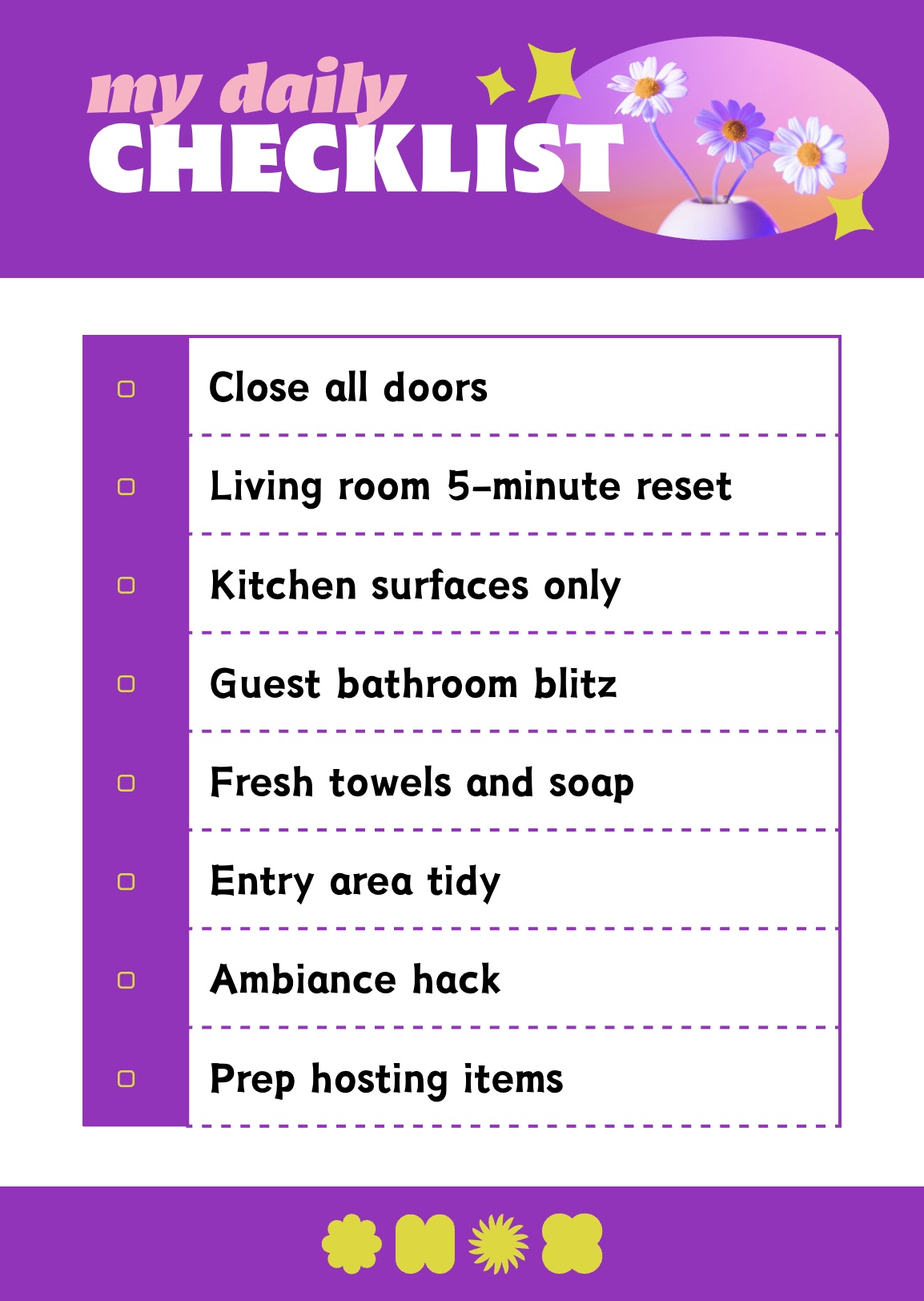
Step 1: Close all doors
Bedrooms, offices, storage rooms—any space guests don’t need to enter. Close the doors. Those rooms don’t exist right now.
Step 2: Living room 5-minute reset
Use Checklist #1. Clear surfaces, straighten cushions, hide the clutter basket.
Step 3: Kitchen surfaces only
Clear and wipe counters. Empty the sink (load dishwasher or hide dishes in oven—yes, really). That’s it.
Step 4: Guest bathroom blitz
Toilet, sink, mirror. Wipe all three. Check for toilet paper. This takes 5 minutes.
Step 5: Fresh towels and soap
Put out clean hand towels. Make sure there’s hand soap. These details matter more than a spotless floor.
Step 6: Entry area tidy
Clear shoes, coats, bags from the entryway. First impressions matter.
Step 7: Ambiance hack
Light a candle or use air freshener. Dim the lights slightly. Ambiance hides imperfection.
Step 8: Prep hosting items
Set out drinks, snacks, or whatever you’re serving. Having things ready makes you feel prepared.
Pro Tips
- Remember: guests are here to see YOU, not inspect your home. Most people don’t notice mess in other people’s houses.
- Dim lighting is your friend. Soft lighting hides dust, clutter, and imperfection.
- Have a designated “panic room.” A closet or room where you can throw things when guests arrive unexpectedly.
11. Nightly 2-Minute Reset Checklist
Time needed: 2 minutes
Best for: Building habits, preventing accumulation, starting tomorrow right
Why This Works for ADHD Brains
This is the most important checklist in this entire guide. It’s the foundation that makes all other cleaning easier.
When you wake up to a relatively tidy space, starting your day feels manageable. When you wake up to yesterday’s mess, you’re already behind before you begin.
Two minutes. Every night. Non-negotiable.
Step-by-Step Instructions
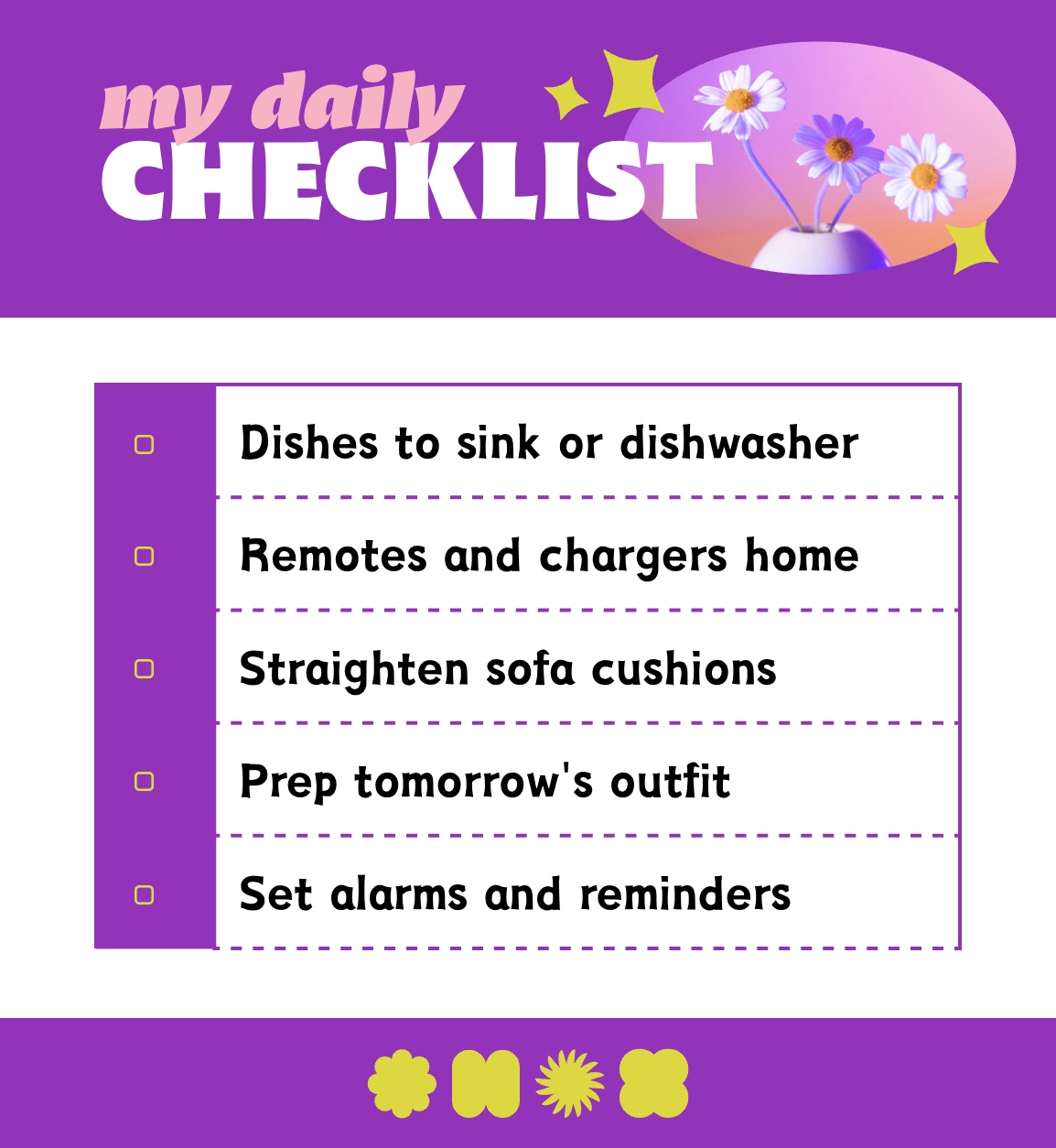
Step 1: Dishes to sink or dishwasher
Any cups, plates, or utensils you used today—move them to the sink or load them. Don’t wash. Just relocate.
Step 2: Remotes and chargers home
Put remotes back on the coffee table. Plug in your phone charger. Return things to their spots.
Step 3: Straighten sofa cushions
30 seconds. Fluff and arrange. Makes the living room look reset.
Step 4: Prep tomorrow’s outfit
Lay out or hang up what you’ll wear tomorrow. Reduces morning decision fatigue.
Step 5: Set alarms and reminders
Check tomorrow’s schedule. Set any alarms you need. Review your to-do list briefly.
Pro Tips
- Anchor this to brushing your teeth. Brush teeth → 2-minute reset. Make it automatic.
- Post this checklist on your fridge. Visual reminder until it becomes habit.
- 2 minutes is the MAX, not the goal. Some nights you’ll do 30 seconds. That’s fine. Consistency beats perfection.
TadaFlow Tip: TadaFlow sends you a gentle nightly reset reminder at your chosen time. It includes a randomized micro-task if you want extra guidance.
Which Checklist Should You Start With?
If you’re feeling overwhelmed by 11 checklists, here’s the simple answer:
Start with Checklist #11: The Nightly 2-Minute Reset.
Here’s why:
- It’s the shortest (2 minutes)
- It requires the least energy
- It creates a foundation for everything else
- It builds the habit of daily maintenance
When you wake up to a reset space every morning, starting other cleaning tasks becomes dramatically easier. The 2-minute reset is the keystone habit that makes all other checklists work.
Your Action Plan
- Tonight: Do the 2-minute reset before bed
- This week: Add one daily checklist (kitchen or bathroom)
- This weekend: Try the living room weekend reset
- When needed: Use the emergency checklists for guests or low-energy days
Remember: Progress over perfection. Even completing half a checklist is infinitely better than completing nothing. Every small action counts.
Take Your ADHD Cleaning System Digital
These checklists work on paper. But if you want a system that adapts to your energy levels, sends smart reminders, and celebrates your wins—TadaFlow was built exactly for this.
TadaFlow is the ADHD cleaning planner designed for neurodivergent minds. It transforms overwhelming housework into simple, actionable routines that work with your brain, not against it.
What makes TadaFlow different:
- Energy-based task suggestions — Low energy? Get low-effort tasks. High energy? Tackle the deep cleans.
- Smart reminders that don’t nag — Gentle nudges at the right time, not constant notifications.
- Visual progress tracking — See your wins. Get the dopamine hit you deserve.
- Flexible, not rigid — Skip a day? No guilt. Just pick up where you left off.
👉 Ready to transform chaos into clarity? Visit TadaFlow.com to get started.
Cleaning with ADHD isn’t about willpower. It’s about having the right system. You’ve got the checklists. Now go check something off.