Blog
Free Printable House Cleaning List: The Ultimate Guide (2025)
Let’s be honest—keeping a house clean feels like a never-ending battle. You finish one room, and another already needs attention. The mental load of remembering what to clean, when to clean it, and how often? Exhausting.
That’s where a free printable house cleaning list changes everything.
In this ultimate guide, you’ll learn:
- How to choose the right cleaning checklist for your lifestyle
- The exact tasks to include in daily, weekly, monthly, and seasonal cleaning routines
- Room-by-room cleaning breakdowns you can follow today
- How to customize any checklist for your family’s unique needs
- Where to download free printable templates (PDF, Word, and digital options)
This guide is for you if:
- You’re a busy professional who wants a cleaner home without the overwhelm
- You’re new to living independently and need a cleaning roadmap
- You’re a parent trying to get the whole family involved in housework
- You simply want to stop forgetting important cleaning tasks
Let’s turn cleaning chaos into a simple, repeatable system.
Table of Contents
- What Is a House Cleaning List?
- Getting Started: Tools and Mindset
- The Core Framework for Cleaning Checklists
- Cleaning Tasks by Time Frequency
- Room-by-Room Cleaning Checklist
- Advanced Tips: Customization and Optimization
- Free Printable Templates Download
- Frequently Asked Questions
Chapter 1: What Is a House Cleaning List?
A house cleaning list (also called a cleaning checklist) is a structured guide that breaks down all your household cleaning tasks into manageable, organized steps. Instead of staring at a messy house wondering where to start, you follow a clear roadmap.
Think of it as a recipe for a clean home. Just like you wouldn’t bake a cake without knowing the ingredients and steps, you shouldn’t approach cleaning without a plan.
Why You Actually Need a Cleaning Checklist
1. It saves time.
No more wandering from room to room, getting distracted, or forgetting what you already cleaned. A checklist keeps you focused and efficient.
2. It ensures consistency.
Every area of your home gets attention on a regular schedule. No more discovering that you haven’t cleaned behind the refrigerator in two years.
3. It reduces mental load.
The satisfaction of checking items off a list is real. You can see your progress, which motivates you to keep going.
4. It enables family participation.
When tasks are written down, anyone can help. Assign chores to family members without repeating yourself ten times.
Common Misconceptions About Cleaning Lists
“Checklists are too rigid for me.”
Actually, the best cleaning lists are flexible. They’re a starting point you customize to fit your life—not a strict rulebook.
“My home is small; I don’t need one.”
Even studio apartments benefit from a cleaning schedule. Small spaces get dirty fast, and a checklist ensures nothing is overlooked.
“Only perfectionists use cleaning lists.”
Wrong. Cleaning lists are for people who don’t want to obsess over cleaning. They help you do enough—not everything—so you can move on with your life.
Your Learning Path in This Guide
Here’s how we’ll build your cleaning system:
- Understand the framework — Learn how to organize tasks by time and space
- Choose your approach — Pick the method that fits your lifestyle
- Download templates — Get free printable lists ready to use
- Customize and optimize — Adapt everything to your unique situation
Chapter 2: Getting Started: Tools and Mindset
Before diving into checklists, let’s make sure you have what you need to clean effectively.
Essential Cleaning Supplies
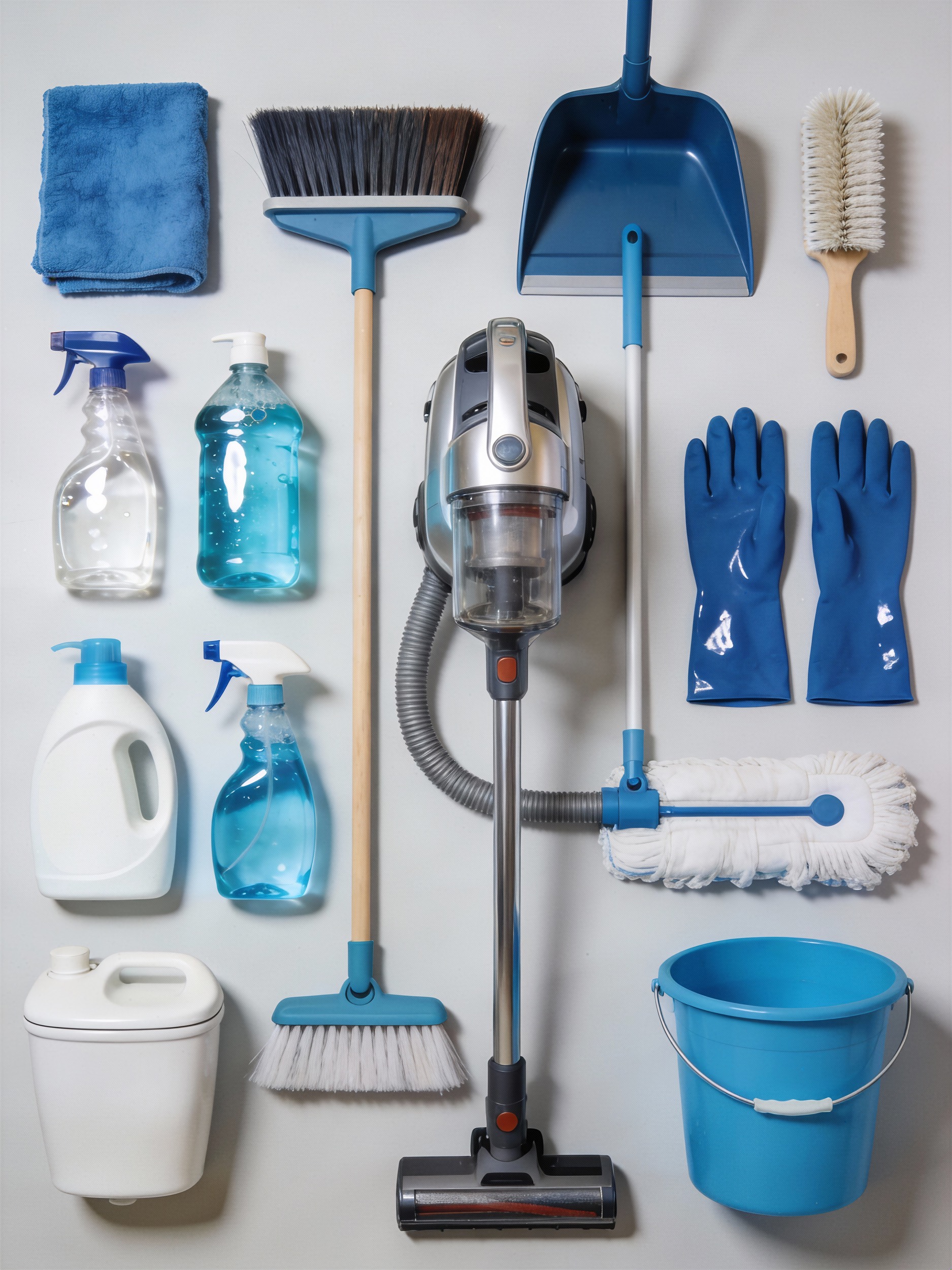
You don’t need a closet full of products. These basics cover 90% of cleaning tasks:
Must-haves:
- Microfiber cloths (at least 5-10) — Better than paper towels, reusable, and won’t scratch surfaces
- All-purpose cleaner — One good spray handles counters, appliances, and most surfaces
- Glass cleaner — For mirrors and windows
- Toilet bowl cleaner — Dedicated product for bathroom hygiene
- Broom and dustpan — For hard floors
- Vacuum cleaner — For carpets, rugs, and upholstery
- Mop and bucket — Or a spray mop for convenience
- Scrub brush — For grout, tubs, and tough spots
- Rubber gloves — Protect your hands
Nice-to-have upgrades:
- Robot vacuum — Handles daily floor maintenance automatically
- Steam cleaner — Chemical-free deep cleaning
- Extendable duster — Reaches ceiling fans and high shelves
The Right Mindset
“Done is better than perfect.”
You don’t need to deep clean every surface every time. Maintenance cleaning keeps your home livable. Save the deep cleaning for monthly or seasonal sessions.
Set realistic expectations.
If you’ve never followed a cleaning schedule before, don’t try to implement everything at once. Start with daily tasks. Add weekly tasks after a week. Build gradually.
Assess Your Household Needs
Before choosing a checklist, consider:
- Home size and layout — A 5-bedroom house needs a different approach than a 1-bedroom apartment
- Number of people — More people = more mess = more frequent cleaning
- Pets — Pet hair and accidents require extra attention
- Allergies — Dust-sensitive households need more frequent dusting and vacuuming
- Available time — Be honest about how much time you can dedicate to cleaning
Chapter 3: The Core Framework for Cleaning Checklists
Every effective cleaning system organizes tasks along two dimensions: time and space.
The Time-Based Framework
Not all cleaning tasks need the same frequency. Here’s how to categorize them:
| Frequency | Time Investment | Purpose |
|---|---|---|
| Daily | 5-15 minutes | Maintain tidiness, prevent buildup |
| Weekly | 1-2 hours | Deeper maintenance, sanitization |
| Monthly | 2-4 hours | Address overlooked areas |
| Seasonal/Yearly | Half day+ | Deep cleaning, organization |
The visual below shows a helpful way to think about this time-based breakdown:
This cleaning frequency chart organizes tasks from daily essentials (making beds, doing dishes) to yearly deep cleans (carpet cleaning, washing walls). Notice how the workload decreases as frequency decreases—daily tasks are quick; yearly tasks are intensive but rare.
The Space-Based Framework
You can also organize cleaning by location:
1. Room-by-Room Method
Clean one entire room before moving to the next. Best for: Deep cleaning sessions, people who like visible progress.
2. Zone Cleaning Method
Divide your home into zones (kitchen, bathrooms, bedrooms, common areas). Tackle one zone per day or week. Best for: Large homes, families with assigned areas.
3. Task-Based Method
Do one type of task throughout the house (dust everything, then vacuum everything, then mop everything). Best for: Efficiency-focused cleaners, smaller homes.
Which Framework Should You Choose?
| Your Situation | Recommended Approach |
|---|---|
| Busy professional with limited time | Daily micro-cleaning (5-10 min) + weekend deep clean |
| Stay-at-home parent | Daily zone rotation |
| Large family | Task assignment system with shared checklist |
| Small apartment | Task-based method (fastest for compact spaces) |
The Golden Rule: Top to Bottom, Inside to Out
Always clean in this order:
- Top to bottom — Dust falls downward. Clean ceilings and high surfaces first, floors last.
- Inside to out — Clean the back of cabinets before the fronts. Work from the far corner of a room toward the door.
This prevents re-cleaning areas you’ve already finished.
Chapter 4: Cleaning Tasks by Time Frequency
Now let’s get specific. Here are the exact tasks to include in each frequency category.
Daily Cleaning Tasks (5-15 minutes total)
These quick tasks prevent mess from accumulating:
- ☐ Make the bed — Takes 2 minutes, instantly makes the bedroom look tidy
- ☐ Do the dishes — Or load/unload the dishwasher
- ☐ Wipe kitchen counters and sink — After cooking or at end of day
- ☐ Put away clutter — Spend 5 minutes returning items to their homes
- ☐ Wipe bathroom surfaces — Quick wipe of sink and counter after use
- ☐ Sweep high-traffic floors — Kitchen and entryway
- ☐ Take out trash — When full, don’t let it overflow
Pro tip: Attach daily tasks to existing habits. Wipe the bathroom sink right after brushing your teeth. It takes 30 seconds.
Weekly Cleaning Tasks (1-2 hours total)
Set aside time once a week for these maintenance tasks:
- ☐ Vacuum or mop all floors — Including under furniture edges
- ☐ Deep clean bathrooms — Toilet (bowl, seat, base, handle), shower/tub, sink
- ☐ Clean kitchen appliances — Wipe exterior of fridge, stove, microwave
- ☐ Change bed linens — Sheets, pillowcases
- ☐ Wash towels — Bath towels, hand towels, dish towels
- ☐ Dust furniture and surfaces — Shelves, tables, TV stands
- ☐ Wipe mirrors and glass — Bathroom mirrors, glass tables
- ☐ Sanitize high-touch points — Door handles, light switches, remotes, faucets
- ☐ Clean out refrigerator — Toss expired items, wipe shelves
Monthly Cleaning Tasks (2-4 hours)
These tasks address areas that don’t need weekly attention:
- ☐ Clean windows (interior) — Glass and frames
- ☐ Dust ceiling fans and vents — Use extendable duster
- ☐ Clean oven and microwave interior — Remove grease and splatters
- ☐ Deep clean refrigerator — Pull out drawers, wipe all surfaces
- ☐ Wash trash cans — Inside and out
- ☐ Wipe baseboards and door frames — Dust and scuff marks accumulate
- ☐ Clean inside cabinets — Kitchen and bathroom
- ☐ Vacuum upholstery — Sofas, chairs, mattresses
- ☐ Clean light switches and outlet covers — Often overlooked germ hotspots
Seasonal and Yearly Tasks
Spring:
- ☐ Clean windows (exterior)
- ☐ Wash curtains and drapes
- ☐ Deep clean carpets
- ☐ Clean behind and under large furniture
- ☐ Organize closets, donate unused items
Summer:
- ☐ Clean outdoor furniture
- ☐ Deep clean grill
- ☐ Power wash deck/patio/driveway
- ☐ Clean garage
Fall:
- ☐ Service HVAC system, replace filters
- ☐ Clean gutters
- ☐ Organize garage and storage areas
- ☐ Check and discard expired medications and toiletries
Winter:
- ☐ Clean fireplace and chimney (professional inspection)
- ☐ Deep clean rugs (professional or rental machine)
- ☐ Clean behind large appliances (fridge, stove, washer/dryer)
- ☐ Wash walls and ceilings
- ☐ Clean light fixtures
Chapter 5: Room-by-Room Cleaning Checklist
Sometimes you need to focus on one room at a time. Here’s a detailed breakdown for each area of your home.
Looking for a structured room-by-room cleaning system? TadaFlow offers pre-built room checklists that you can customize and track digitally—perfect if you want the convenience of a printable list with the flexibility of a smart app.
Kitchen Cleaning Checklist
The kitchen needs the most frequent attention due to food preparation and high traffic.
Daily:
- ☐ Wipe countertops and stovetop
- ☐ Clean sink and faucet
- ☐ Wash dishes or run dishwasher
- ☐ Sweep floor
Weekly:
- ☐ Clean exterior of all appliances
- ☐ Wipe cabinet fronts and handles
- ☐ Clean microwave interior
- ☐ Mop floor
- ☐ Clean out refrigerator
- ☐ Take out recycling
Monthly:
- ☐ Deep clean oven
- ☐ Clean inside cabinets and drawers
- ☐ Descale coffee maker and kettle
- ☐ Clean range hood and filter
- ☐ Wash trash can
Pro tip: Pour baking soda down the drain weekly to control odors. Follow with hot water.
Bathroom Cleaning Checklist
Bathrooms require regular sanitization to prevent mold and bacteria buildup.
Daily:
- ☐ Wipe sink and counter after use
- ☐ Squeegee shower door/walls (prevents water spots)
- ☐ Hang towels to dry properly
Weekly:
- ☐ Scrub toilet (bowl, seat, base, handle)
- ☐ Clean shower/tub and tiles
- ☐ Wipe vanity and sink thoroughly
- ☐ Clean mirror
- ☐ Mop floor
- ☐ Wash bath mat
- ☐ Replace hand towels
Monthly:
- ☐ Clean grout lines
- ☐ Wash shower curtain or liner
- ☐ Clean exhaust fan
- ☐ Organize cabinets, discard expired products
- ☐ Deep clean toilet (including behind and around base)
Pro tip: Keep a squeegee in the shower. A 30-second wipe after each shower prevents 80% of soap scum and mildew.
Bedroom Cleaning Checklist
Bedrooms should be restful spaces. Regular cleaning improves sleep quality.
Daily:
- ☐ Make the bed
- ☐ Put away clothes
- ☐ Clear nightstand clutter
Weekly:
- ☐ Change bed linens
- ☐ Dust all surfaces (nightstands, dressers, shelves)
- ☐ Vacuum or sweep floor
- ☐ Vacuum under bed (if accessible)
Monthly:
- ☐ Wash pillows and mattress protector
- ☐ Flip or rotate mattress
- ☐ Clean windows
- ☐ Dust ceiling fan and light fixtures
- ☐ Organize closet
Pro tip: Sprinkle baking soda on your mattress, let it sit for 30 minutes, then vacuum. This removes odors and freshens the surface.
Living Room Cleaning Checklist
High-traffic common areas need regular attention.
Daily:
- ☐ Tidy clutter (remotes, magazines, toys)
- ☐ Fluff and arrange pillows
Weekly:
- ☐ Dust all surfaces (shelves, tables, decor)
- ☐ Vacuum floors and rugs
- ☐ Vacuum sofa cushions and underneath
- ☐ Wipe TV screen and electronics
- ☐ Sanitize remotes and game controllers
- ☐ Clean windows and blinds
Monthly:
- ☐ Deep clean upholstery
- ☐ Wash throw blankets and pillow covers
- ☐ Dust ceiling fan and light fixtures
- ☐ Clean behind furniture
Laundry Room Cleaning Checklist
Often overlooked, but a dirty laundry room can make your clean clothes smell musty.
Weekly:
- ☐ Wipe exterior of washer and dryer
- ☐ Clean lint trap (every load, actually)
- ☐ Wipe counters and folding surfaces
- ☐ Sweep floor
Monthly:
- ☐ Run empty hot cycle with vinegar or washer cleaner
- ☐ Clean dryer vent and duct
- ☐ Wipe inside washer drum and door seal
- ☐ Organize cleaning supplies
Chapter 6: Advanced Tips: Customization and Optimization
A generic checklist is a starting point. Here’s how to make it work for your life.
Customize for Your Household Type
Homes with pets:
- Increase vacuuming frequency (every 2-3 days minimum)
- Add lint rolling furniture to weekly tasks
- Clean pet beds and feeding areas weekly
- Keep enzyme cleaner on hand for accidents
Homes with young children:
- Add daily toy pickup to the routine
- Increase floor cleaning frequency (kids are on the floor constantly)
- Sanitize high-touch surfaces more often
- Make cleaning a game—kids love checking off lists too
Allergy-sensitive households:
- Use HEPA filter vacuums
- Dust with damp cloths (dry dusting spreads allergens)
- Wash bedding in hot water weekly
- Consider air purifiers in bedrooms
The 7-Day Home Reset Method
Feeling overwhelmed? Try this structured approach to get your home back on track:
This 7-day reset plan breaks whole-house cleaning into manageable daily focuses. Day 1 tackles clutter and paperwork. Day 2 focuses on the living room. Day 3 resets bedrooms. Day 4 deep cleans the kitchen. Day 5 refreshes bathrooms. Day 6 handles entryways and floors. Day 7 finishes with air freshening and final touches.
This method works because:
- You only focus on one area per day
- Tasks are specific and achievable
- By day 7, your entire home is refreshed
Task Delegation Strategies
Assign by age and ability:
- Ages 3-5: Put toys away, make bed (with help), wipe low surfaces
- Ages 6-9: Set/clear table, feed pets, empty small trash cans, dust
- Ages 10-12: Vacuum, load dishwasher, clean bathroom sinks, fold laundry
- Teens: All of the above plus mopping, deep cleaning, yard work
Use a visible tracking system:
- Post the checklist on the refrigerator
- Use a whiteboard with assigned names
- Try a digital tool like TadaFlow for shared family task lists with notifications
Make it rewarding:
- Gamify with points and rewards
- Play upbeat music during cleaning time
- Celebrate completion with a family activity
Efficiency Hacks
Batch similar tasks:
Instead of cleaning one room completely, do all dusting throughout the house, then all vacuuming, then all mopping. You’ll move faster and stay in “task mode.”
Use timers:
Set a 15-minute timer and see how much you can accomplish. The time pressure creates focus and makes cleaning feel like a game.
Keep supplies accessible:
Store cleaning supplies on each floor or in each bathroom. Walking to get supplies wastes time and breaks momentum.
Clean as you go:
Wipe the stove while dinner cooks. Clean the shower while you’re in it. Small actions prevent big cleaning sessions.
Chapter 7: Free Printable Templates Download
Ready to put this into action? Head over to TadaFlow.com to download your free printable cleaning checklists.
What’s Included
On the TadaFlow homepage, you’ll find a complete set of free printable house cleaning lists:
- Daily Cleaning Checklist — Quick 10-minute routine
- Weekly Cleaning Checklist — Comprehensive maintenance tasks
- Monthly Cleaning Checklist — Deep cleaning reminders
- Room-by-Room Checklist — Detailed tasks for each space
- Seasonal Deep Clean Checklist — Quarterly intensive cleaning
Available Formats
All templates are available for free download at TadaFlow.com:
- PDF — Print and use immediately
- Word (.docx) — Edit and customize before printing
- Digital/Interactive — Use on your phone or tablet
How to Use These Templates
Option 1: Print and post
Print your checklist and stick it on the refrigerator, inside a cabinet door, or in your cleaning closet. Check off tasks with a pen.
Option 2: Laminate and reuse
Laminate the checklist and use a dry-erase marker. Wipe clean at the end of each week and start fresh.
Option 3: Go digital
If paper isn’t your style, use a digital checklist app. TadaFlow is specifically designed for cleaning routines—it lets you:
- Create custom checklists for each room
- Set recurring reminders for daily, weekly, and monthly tasks
- Share lists with family members
- Track your cleaning streaks and progress
For those who struggle with executive function or need extra structure (hello, ADHD brains!), TadaFlow’s approach of breaking tasks into small, actionable steps can be a game-changer.
Other Helpful Tools
- Google Sheets — Create shareable, editable checklists
- Trello — Visual board-style task management
- Notion — Customizable templates and databases
Chapter 8: Frequently Asked Questions
How often should I deep clean my house?
Most homes benefit from a thorough deep clean every 3-6 months. However, if you maintain daily and weekly cleaning routines, your deep cleans will be much easier. Seasonal deep cleaning (4 times per year) is a good target for most households.
What’s the difference between a cleaning checklist and a cleaning schedule?
A checklist lists what needs to be done. A schedule specifies when each task should happen. Ideally, you use both: a schedule tells you “vacuum on Saturdays,” and a checklist ensures you don’t forget to vacuum under the couch cushions.
How do I get my family to help with cleaning?
- Make expectations clear — Post a visible checklist with assigned names
- Start young — Even toddlers can put toys in a bin
- Be consistent — Same tasks, same time, every week
- Avoid redoing their work — Imperfect cleaning is still cleaning
- Express appreciation — Thank them genuinely
What is the “top to bottom” cleaning rule?
Always clean higher surfaces before lower ones. Dust from ceiling fans falls onto furniture. Crumbs from counters fall onto floors. If you clean floors first, you’ll have to clean them again after dusting. Work from ceiling to floor, always.
How do I stay motivated to clean?
- Use a timer — 15 minutes feels manageable
- Play music or podcasts — Makes the time pass faster
- Reward yourself — Enjoy a treat or relaxation after cleaning
- Track your progress — Checking off tasks is satisfying
- Remember why — A clean home reduces stress and improves health
Can I clean my whole house in one day?
Yes, but it’s exhausting and often unsustainable. A better approach is spreading tasks throughout the week:
- Daily: 10-15 minutes of maintenance
- Weekly: 1-2 hours of deeper cleaning
- Monthly: 2-4 hours for overlooked areas
This prevents the dreaded “marathon cleaning day” and keeps your home consistently clean.
What cleaning tasks should I do every day?
At minimum:
- Make beds
- Do dishes
- Wipe kitchen counters
- Quick tidy of clutter
These 4 tasks take under 15 minutes and make the biggest visual impact.
How do I create a cleaning schedule in Excel?
- Open a new spreadsheet
- Create columns for: Task, Frequency, Day/Date, Assigned To, Completed
- List all your cleaning tasks
- Assign frequencies (daily, weekly, monthly)
- Use conditional formatting to highlight overdue tasks
- Print or share with family members
Or skip the setup and use TadaFlow, which has pre-built cleaning templates ready to customize.
Conclusion
A free printable house cleaning list isn’t just a piece of paper—it’s a system that transforms how you maintain your home.
Key takeaways from this guide:
- Organize by time and space — Daily, weekly, monthly tasks + room-by-room breakdowns
- Start simple — Begin with daily tasks, add weekly tasks after you’ve built the habit
- Customize for your life — Adjust frequencies based on household size, pets, allergies, and available time
- Use the right tools — Whether paper checklists or digital apps, find what works for you
Your next step:
Download our free printable templates and start with just the daily checklist. Commit to one week. Once that feels automatic, add the weekly tasks.
If you want a smarter, more flexible approach, try TadaFlow. It’s designed to turn overwhelming housework into simple, actionable routines—perfect for busy families and anyone who needs structure without rigidity.
Stop dreading cleaning. Start checking things off.